Hyperlocal Production: The True Cost of Urban Factories

Aug 13, 2025 By

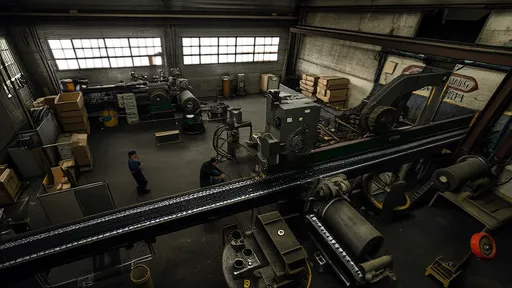
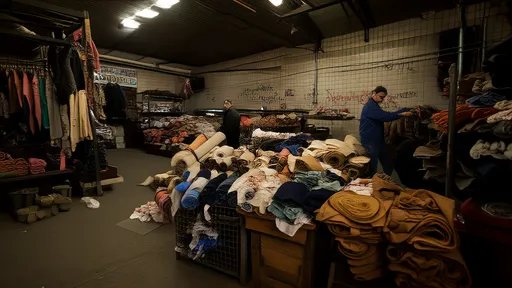
The gleaming promise of hyperlocal manufacturing has captured the imagination of urban planners and sustainability advocates alike. The idea of producing goods within city limits, reducing transportation emissions, and creating local jobs seems like an unequivocal win. Yet beneath this utopian vision lies a complex web of economic realities that challenge the feasibility of urban factories. The truth about the costs of hyperlocal production reveals a landscape where good intentions often collide with hard financial truths.

Walk through any gentrifying neighborhood in Brooklyn or Berlin, and you'll encounter boutique workshops producing everything from artisanal chocolates to custom bicycles. These small-scale operations benefit from proximity to affluent consumers willing to pay premium prices for locally made goods. However, scale this model to meet broader urban needs, and the economic equations change dramatically. The romantic notion of urban factories supplying entire cities with daily necessities stumbles when confronted with the harsh mathematics of real estate prices, labor costs, and logistical constraints.

The real estate paradox presents the first major hurdle. Urban land comes at an extraordinary premium, with square footage costs that make industrial operations financially untenable without significant subsidies. Where a rural factory might sprawl across acres of inexpensive land, its urban counterpart must build vertically or occupy repurposed spaces never designed for manufacturing. The adaptive reuse of old warehouses helps somewhat, but retrofitting these structures with proper ventilation, heavy power requirements, and loading infrastructure often costs more than new construction in industrial zones.

Labor constitutes another critical factor that disrupts the hyperlocal economic model. Urban workers rightly demand wages that reflect city living costs, creating a payroll burden that rural factories don't face to the same degree. The skilled labor shortage in many urban centers further compounds this challenge, as manufacturers compete with tech firms and service industries for talent. While automation presents a partial solution, the high capital costs of robotic systems typically require production volumes that exceed what hyperlocal models can sustain.

Transportation savings, often touted as hyperlocal manufacturing's greatest advantage, frequently fail to materialize as predicted. Dense urban environments create their own logistical nightmares - delivery trucks stuck in traffic, parking limitations for loading docks, and noise restrictions that limit operating hours. The "last mile" problem in cities often costs more to solve than shipping goods hundreds of miles between regional hubs. Ironically, the very density that makes cities attractive markets also makes serving them efficiently extraordinarily difficult.

Hidden infrastructure costs lurk beneath the surface of many urban manufacturing projects. Municipalities eager to attract these operations frequently underestimate the strain they place on aging utility systems. A single medium-sized factory might require electrical upgrades equivalent to powering several city blocks. Water and sewage systems designed for residential and commercial use often can't handle industrial demands without expensive retrofits. These hidden public expenses rarely appear in the glossy brochures promoting urban manufacturing initiatives.

The regulatory environment presents yet another layer of complexity. Zoning laws, never designed with modern urban factories in mind, create labyrinthine approval processes. Environmental regulations, while necessary, become exponentially more challenging to satisfy in densely populated areas. Noise ordinances, emissions controls, and waste disposal rules that might be manageable in industrial parks become deal-breakers when factories sit adjacent to apartments and offices. The compliance costs alone can erase any potential savings from shortened supply chains.

Consumer behavior introduces its own economic contradictions. While surveys consistently show urban dwellers value locally made products, their purchasing patterns tell a different story. When confronted with the 20-30% price premiums that urban manufacturing typically requires, most consumers revert to cheaper, mass-produced alternatives. The exception exists for certain status goods where "local" carries cachet, but for everyday necessities, the economics rarely work. This creates a catch-22 where urban factories can't achieve the scale to lower prices without first securing demand that only lower prices can create.

Some proponents argue that technological advances will solve these economic challenges. 3D printing, modular micro-factories, and AI-driven optimization do offer intriguing possibilities. However, these technologies currently supplement rather than replace traditional manufacturing methods. Their high capital costs and limited production capacities make them suitable for niche products but inadequate for supplying urban populations at scale. The breakthrough that makes hyperlocal manufacturing universally viable remains elusive.

The most successful urban manufacturing operations tend to cluster in specific categories where proximity creates undeniable value. Perishable goods like baked goods and brewed beverages benefit from ultra-fresh delivery. Highly customized products leverage direct designer-client interaction. Items with high weight-to-value ratios, such as furniture, save on shipping costs. These exceptions prove the rule - hyperlocal works where unique conditions offset urban cost disadvantages, not as a blanket solution for urban supply chains.

This isn't to suggest urban manufacturing has no place in future cities. Rather, its role must be understood within realistic economic parameters. Hybrid models that combine regional production facilities with urban finishing centers may offer more sustainable solutions. Strategic partnerships between manufacturers can share infrastructure costs. Policy innovations like industrial land trusts could make space more affordable. The path forward lies in acknowledging cost realities while creatively addressing them, not in wishful thinking that ignores fundamental economics.

The conversation about hyperlocal manufacturing needs to mature beyond simplistic either/or propositions. Urban factories won't replace global supply chains, but they can meaningfully complement them where conditions allow. The true cost picture reveals an ecosystem where certain products make sense to produce locally, while most don't. Recognizing this complexity allows for more nuanced policies and business models that harness hyperlocal benefits without falling prey to its economic fantasies.

Recommend Posts
Fashion

Transition from Digital Lavender" to "Rust Iron Red" in the 2025 Fall/Winter Key Color Palette

By /Aug 21, 2025

The transition from Digital Lavender to Rust Iron Red in the 2025 autumn/winter key color palette marks a fascinating evolution in seasonal aesthetics, blending the ethereal with the earthy in a narrative that speaks to both technological advancement and a return to raw, natural elements. This shift is not merely a change in hue but a reflection of broader cultural and design movements, capturing the zeitgeist of a world balancing digital innovation with a craving for authenticity and tactile experiences.
Fashion

Rolex Datejust: The Feminine Revolution of Men's Watches in Women's Sizes

By /Aug 13, 2025

For decades, the Rolex Datejust has stood as an icon of horological perfection—a watch that transcends trends while quietly rewriting the rules of wristwear. But in recent years, a subtle revolution has been taking place within this legendary collection, one that challenges traditional notions of gendered sizing and redefines what it means to wear a "man's watch." The rise of men embracing traditionally feminine-sized Datejust models—particularly the elegant 31mm and even the delicate 28mm—signals a seismic shift in how masculinity interacts with precision engineering.
Fashion

Converse Identity Crisis: From Rebel Symbol to School Uniform Dilemma

By /Aug 13, 2025

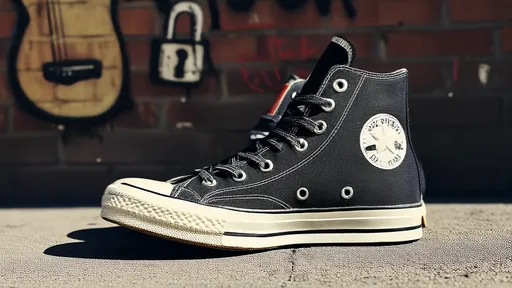
In the dimly lit basements of punk rock clubs and on the cracked pavement of urban basketball courts, Converse sneakers once spoke a language of rebellion. The rubber soles carried the weight of counterculture movements, from Kurt Cobain’s shredded Chuck Taylors to the DIY graffiti splattered across All Stars by underground artists. Yet today, those same shoes shuffle through school hallways, their once-defiant laces now tied neatly by teenagers who might never know their subversive lineage. This is the identity crisis of Converse: a brand that mutated from anti-establishment armor to mass-market uniform, leaving its cultural soul in limbo.
Fashion

Hermes Birkin Clone: Legalization Movement for Counterfeits

By /Aug 13, 2025

The world of luxury fashion has long been defined by exclusivity, craftsmanship, and eye-watering price tags. At the pinnacle of this universe sits the Hermès Birkin bag—a symbol of status so coveted that its waiting lists span years, and pre-owned specimens routinely fetch six figures at auction. Yet beneath the glossy surface of this rarefied market, a quiet revolution is brewing. A growing movement is challenging the legal and ethical boundaries surrounding "clone" Birkins—high-quality replicas that mimic the original’s design without infringing on trademarks—sparking debates about accessibility, intellectual property, and the very meaning of luxury in the 21st century.
Fashion

Burberry Trench Coat: Refugee Theme Sparks Controversy

By /Aug 13, 2025

Burberry, the iconic British luxury fashion house, has found itself at the center of a heated controversy following its latest campaign featuring trench coats—a signature item in its collection—styled in a way that critics argue evokes imagery associated with refugees. The campaign, intended to showcase the brand’s heritage and timeless appeal, has instead sparked outrage, with accusations of insensitivity and tone-deafness in the midst of global humanitarian crises.
Fashion

Chanel Tweed Rebellion: Punk Rivets Invasion

By /Aug 13, 2025

The world of haute couture has always thrived on contrasts—the delicate interplay between tradition and rebellion, refinement and raw energy. Few moments in recent fashion history embody this tension as vividly as Chanel’s audacious twist on its iconic tweed, a fabric long synonymous with timeless elegance. But in a bold stroke of punk irreverence, the house unleashed a collection where studs and spikes clawed their way into the meticulously woven threads, signaling not just an aesthetic shift but a full-blown mutiny against its own heritage.
Fashion

California Anxiety Aesthetics: The Illusion of Health in Consumerism

By /Aug 13, 2025

The California wellness industry has long been synonymous with sunshine, avocado toast, and yoga retreats. But beneath the Instagram-perfect facade of green juices and mindfulness apps lies a darker truth: an entire economy built on commodifying anxiety. What began as a holistic approach to self-care has mutated into a relentless consumerist machine, where inner peace comes with a premium price tag and mental health is repackaged as just another lifestyle accessory.
Fashion

Suzhou Garden Art: Transplanting Rock Structure into Western Suit Patterns

By /Aug 13, 2025

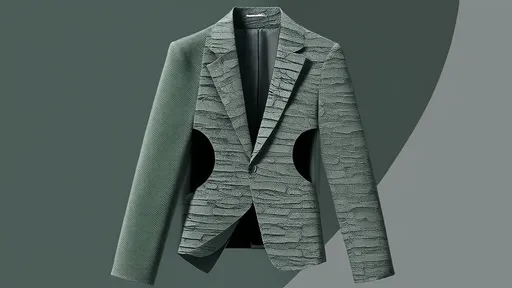
The ancient art of Suzhou gardens has long been celebrated for its delicate balance between nature and human ingenuity. Among its most iconic features are the meticulously arranged rockeries, where jagged limestone formations rise like frozen waves, their voids and protrusions carefully calculated to create harmony. Now, in an unexpected fusion of East and West, these principles of spatial poetry are being translated into the realm of haute couture – specifically, the architecture of tailored suits.
Fashion

London Finance and Fashion: The Invisible Show of Wealth by Investment Banking Men

By /Aug 13, 2025

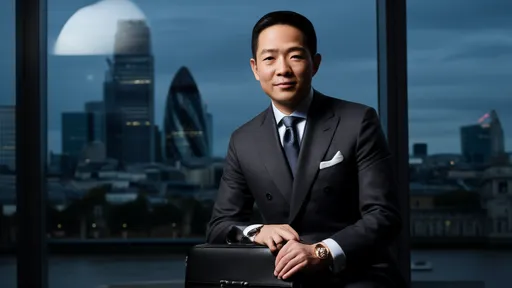
In the rarefied world of London’s investment banking circles, wealth whispers rather than shouts. Unlike the flashy displays of nouveau riche culture, the city’s financial elite have perfected a more subtle art of showcasing their status—one that hinges on discretion, heritage, and an almost imperceptible attention to detail. This is not about Lamborghinis or diamond-encrusted watches; it’s about the quiet confidence of a Savile Row suit, the worn-in leather of a bespoke briefcase, or the deliberate choice of a vintage Patek Philippe over something louder. Here, the rules of flaunting are unwritten but deeply understood.
Fashion

Tokyo Vacuum Fashion: The Ultimate Practice of Logo-less Minimalism

By /Aug 13, 2025

In the heart of Tokyo’s ever-evolving fashion landscape, a quiet revolution is taking place. The city’s avant-garde designers and discerning consumers are embracing what can only be described as "vacuum fashion"—a movement defined by the absence of logos, the rejection of overt branding, and a relentless pursuit of purity in design. This is not minimalism for the sake of aesthetics alone; it is a philosophical stance against the noise of consumerism, a deliberate stripping away of the unnecessary to reveal something far more profound.
Fashion

Paris Underground Aesthetics: The Rise of Anti-Elitist Streetwear

By /Aug 13, 2025

In the labyrinthine streets of Paris, a quiet revolution is unfolding—one that challenges the city’s long-standing reputation as a bastion of high culture and elite sensibilities. Beneath the shadow of Haussmann’s grand boulevards and the glittering façades of luxury boutiques, an underground movement has emerged, redefining urban aesthetics through the humble medium of street signs. These are not the ornate, gilded plaques of the establishment but raw, defiant markers that speak to a growing disdain for institutional authority and a celebration of grassroots creativity.
Fashion

Edible Packaging Controversy: Risk of Ingestion vs. Environmental Benefits

By /Aug 13, 2025

The rise of edible packaging has sparked a heated debate among environmentalists, food safety experts, and consumers alike. As the world grapples with the plastic pollution crisis, edible alternatives made from seaweed, rice, or potato starch offer a tantalizing solution. Yet beneath the surface of this eco-friendly innovation lies a complex web of potential risks and unintended consequences that demand careful examination.
Fashion

Hyperlocal Production: The True Cost of Urban Factories

By /Aug 13, 2025

The gleaming promise of hyperlocal manufacturing has captured the imagination of urban planners and sustainability advocates alike. The idea of producing goods within city limits, reducing transportation emissions, and creating local jobs seems like an unequivocal win. Yet beneath this utopian vision lies a complex web of economic realities that challenge the feasibility of urban factories. The truth about the costs of hyperlocal production reveals a landscape where good intentions often collide with hard financial truths.
Fashion

Modular Design Dilemma: The Repair Challenges of Detachable Clothing

By /Aug 13, 2025

The fashion industry's recent embrace of modular design in clothing – garments with detachable components meant to extend wearability and reduce waste – has encountered an unexpected roadblock. While these innovative designs promise sustainability through mix-and-match versatility, they're creating a new generation of repair challenges that even skilled tailors struggle to address.
Fashion

Water Conservation Dyeing Scam: Exposure of Green Marketing by Some Brands

By /Aug 13, 2025

The textile industry has long been criticized for its environmental footprint, particularly in water consumption and chemical pollution. In recent years, several brands have proudly marketed their "water-saving dyeing" technologies as a sustainable breakthrough. However, investigations reveal that some of these claims are nothing more than clever greenwashing tactics designed to appeal to eco-conscious consumers without delivering real environmental benefits.
Fashion

The Black Market for Textile Surplus: Designer Scraps Circulate in the Grey Zone

By /Aug 13, 2025

The fashion industry thrives on creativity, but behind the scenes, a shadowy marketplace for designer deadstock fabrics has emerged. In ateliers from Paris to Shanghai, whispers of clandestine textile deals reveal an open secret: high-end fabric leftovers often vanish from official inventories only to resurface in unauthorized channels. This underground trade in luxury materials operates in legal gray areas, exposing contradictions between sustainability efforts and intellectual property concerns.
Fashion

AR Try-On Revolution: Real-Time Virtual Outfit on Subway Billboards

By /Aug 13, 2025

In the bustling heart of urban centers, subway stations have long been prime real estate for advertisers. But a quiet revolution is unfolding as static posters give way to interactive augmented reality (AR) experiences. The latest innovation? Real-time virtual try-ons that allow commuters to "wear" clothing and accessories simply by standing before digital billboards.
Fashion

Democratization of Live Streaming: Thousands Vote to Decide the Final Showpiece"

By /Aug 13, 2025

The front row at Shanghai Fashion Week erupted in cheers as the final model strutted down the runway wearing an avant-garde holographic gown - not chosen by the designer, but by 38,000 viewers voting in real-time through their smartphones. This unprecedented moment marked the culmination of "Democratized Runway," an experiment blurring the lines between haute couture and participatory entertainment.
Fashion

Fashion Library 3.0: Luxury Subscription Membership Tier System

By /Aug 13, 2025

The fashion industry is undergoing a quiet revolution, and its epicenter might surprise you. Tucked away from the flashy runway shows and celebrity-studded front rows, a new paradigm is emerging in how consumers access luxury fashion. The Fashion Library 3.0 concept represents a fundamental shift from ownership to access, rewriting the rules of engagement between high-end brands and their most devoted followers.
Fashion

Mystery Box Ethical Dilemma: Unknown Brands Involved in Ethical Controversy

By /Aug 13, 2025

The blind box phenomenon has taken global consumer markets by storm, offering shoppers the thrill of surprise purchases. Yet beneath the glossy packaging and social media hype lies an ethical quagmire that few companies dare to address. Unknown brands flooding the blind box market present particularly troubling questions about consumer exploitation, manufacturing transparency, and psychological manipulation.