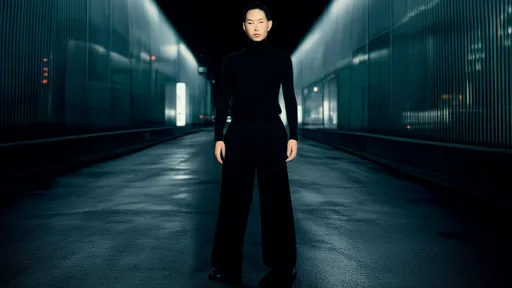
In the heart of Tokyo’s ever-evolving fashion landscape, a quiet revolution is taking place. The city’s avant-garde designers and discerning consumers are embracing what can only be described as "vacuum fashion"—a movement defined by the absence of logos, the rejection of overt branding, and a relentless pursuit of purity in design. This is not minimalism for the sake of aesthetics alone; it is a philosophical stance against the noise of consumerism, a deliberate stripping away of the unnecessary to reveal something far more profound.
The term "vacuum fashion" might sound paradoxical—after all, fashion has long been associated with expression, identity, and, often, the conspicuous display of status. Yet in Tokyo, a growing number of designers are challenging this notion by creating garments that exist in a self-contained universe, free from the gravitational pull of brand recognition. These pieces are not anonymous, but rather, they demand engagement on their own terms. Without logos to telegraph value or affiliation, the wearer and the observer are forced to confront the clothing itself—its cut, its fabric, its silent dialogue with the body.
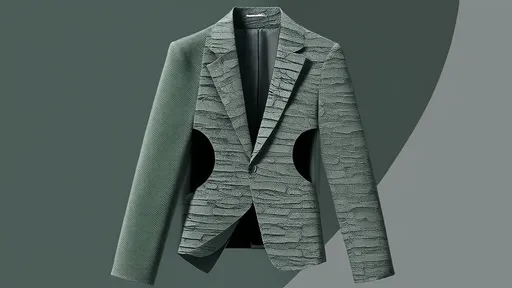
At the forefront of this movement are labels like Yohji Yamamoto and Comme des Garçons, though their influence has now trickled down to a new generation of designers who take the concept even further. Brands such as Kolor and White Mountaineering have refined the art of subtlety, crafting pieces that whisper rather than shout. A jacket from these labels might feature impeccable tailoring or an innovative fabric blend, but you won’t find a single logo declaring its origin. The value lies in the craftsmanship, the wearer’s understanding of the piece’s worth, and the almost spiritual connection between garment and individual.
What makes Tokyo’s vacuum fashion particularly fascinating is its cultural underpinnings. Japan has a long history of valuing the unseen, the implied, and the ephemeral—think of wabi-sabi, the acceptance of imperfection, or ma, the appreciation of negative space. This sensibility translates seamlessly into fashion, where the absence of branding becomes a form of elegance. It’s a rejection of the Western model, where luxury is often synonymous with visibility, in favor of something more introspective and personal.
The rise of vacuum fashion also reflects a broader shift in consumer attitudes. In an era of information overload and relentless advertising, there’s a growing appetite for authenticity and discretion. Younger generations, in particular, are disillusioned with the performative aspects of social media and the pressure to curate a branded identity. Tokyo’s logo-less ethos offers an alternative: clothing that speaks to the self rather than the crowd, that values substance over symbolism.
Of course, the absence of logos doesn’t mean the absence of identity. On the contrary, vacuum fashion requires a deeper level of engagement. Without the crutch of branding, designers must rely entirely on their vision and technical prowess. A single seam or the drape of a sleeve becomes a signature. For the wearer, the act of choosing such pieces is inherently personal—it’s a declaration of confidence, an understanding that true style doesn’t need to announce itself.
This movement isn’t confined to high-end boutiques. Even Tokyo’s streetwear scene, traditionally a playground for bold graphics and logos, is flirting with the vacuum aesthetic. Emerging brands are experimenting with muted palettes, hidden details, and a focus on material innovation over branding. The result is a streetwear that feels more mature, more considered, and ultimately, more enduring.
Yet, for all its appeal, vacuum fashion is not without its challenges. In a global market still obsessed with logos and status symbols, how does a logo-less brand carve out a space for itself? The answer, it seems, lies in cultivating a community of true believers—those who value the intangible over the instant gratification of recognition. It’s a slow burn, but one that promises a deeper, more lasting connection.
As the fashion world grapples with questions of sustainability, overproduction, and the ethical implications of consumerism, Tokyo’s vacuum fashion offers a compelling alternative. It’s a reminder that clothing can be meaningful without being loud, that luxury can be found in the absence of excess. In a city where the future of fashion is constantly being rewritten, the rise of the logo-less is perhaps the most radical statement of all.

By /Aug 21, 2025
By /Aug 13, 2025
By /Aug 13, 2025
By /Aug 13, 2025

By /Aug 13, 2025

By /Aug 13, 2025
By /Aug 13, 2025
By /Aug 13, 2025
By /Aug 13, 2025
By /Aug 13, 2025
By /Aug 13, 2025

By /Aug 13, 2025

By /Aug 13, 2025
By /Aug 13, 2025

By /Aug 13, 2025
By /Aug 13, 2025

By /Aug 13, 2025

By /Aug 13, 2025

By /Aug 13, 2025

By /Aug 13, 2025
