The fashion industry thrives on creativity, but behind the scenes, a shadowy marketplace for designer deadstock fabrics has emerged. In ateliers from Paris to Shanghai, whispers of clandestine textile deals reveal an open secret: high-end fabric leftovers often vanish from official inventories only to resurface in unauthorized channels. This underground trade in luxury materials operates in legal gray areas, exposing contradictions between sustainability efforts and intellectual property concerns.
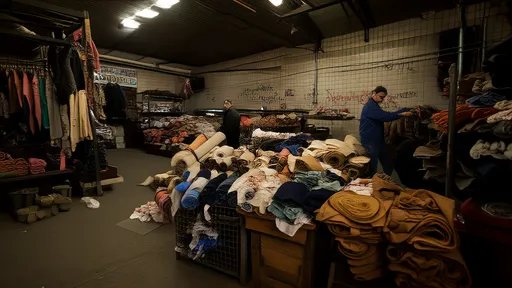
Bolt by bolt, thousands of meters of premium fabrics disappear annually from fashion houses - not stolen in the traditional sense, but diverted through backdoor networks. A junior designer might "forget" to return swatches; a warehouse manager could "misplace" partial rolls; production assistants sometimes "salvage" cuttings that were meant for destruction. These materials, often carrying retail values of €100-€500 per meter, accumulate into fortunes when traded covertly.
The supply chain leaks at multiple points. During seasonal cleanouts, fabrics officially marked for recycling frequently get intercepted. "The recycling company's driver might pull over halfway to meet someone with cash," reveals a Milan-based textile agent who requested anonymity. "Next day, those Prada-grade wools appear in small designers' studios without documentation." Luxury brands typically destroy excess materials to maintain exclusivity, but increasingly, employees circumvent these protocols seeing it as ecological waste.
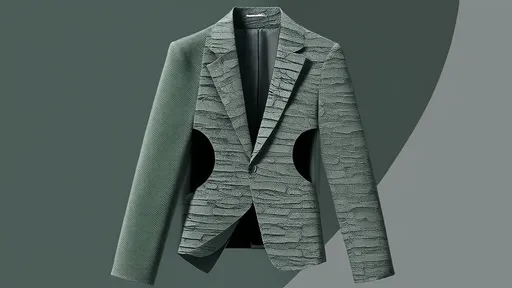
Independent designers comprise the primary demand side, hungry for materials they couldn't otherwise afford. A Seoul-based emerging designer admits: "I bought suspected Chanel tweed from a guy who meets clients in parking lots. No labels, but any expert would recognize the quality." These transactions allow small creators to work with luxury materials while avoiding trademark infringement - the fabrics become legally ambiguous once removed from their original branding context.
Online platforms have intensified this gray market. Instagram accounts with coded names like "@Textile_Archive_Private" showcase fabric offerings through carefully framed photos that avoid full pattern reveals. Transactions migrate to encrypted apps after initial contact. "The sellers know exactly how much to show to attract knowledgeable buyers without providing evidence of origin," explains a London College of Fashion researcher studying these networks.
Legal experts note the jurisdictional maze surrounding these activities. While brands retain copyright on signature prints, European Union circular economy regulations encourage material reuse. "A prosecutor would need proof the fabric was stolen rather than rightfully acquired as surplus," says a Parisian intellectual property lawyer. Many cases get dismissed as internal disciplinary matters rather than criminal theft.
The ecological dimension complicates moral judgments. "We're talking about preventing tons of fabric from landfills," argues a sustainable fashion advocate. Luxury brands' destruction policies, meant to protect exclusivity, increasingly clash with environmental priorities. Some employees rationalize their participation in fabric diversion as ecological activism, even while profiting personally.
Quality control issues emerge as the fabrics change hands. A New York dressmaker recounts receiving "deadstock" silk that had been improperly stored, ruining a collection. Without legitimate supply chain documentation, buyers assume all risks. Counterfeiters also exploit this market, passing off inferior materials as premium deadstock.
Brands are responding with high-tech tracking. Louis Vuitton recently patented a blockchain system for fabric roll monitoring, while Burberry experiments with biodegradable color markers that invalidate fabrics if removed improperly. Yet enforcement remains spotty - the very artisans who create these materials often sympathize with small designers seeking access.
This underground trade reveals fashion's central paradox: an industry built on constant renewal struggles to control the afterlife of its creations. As sustainability pressures grow, brands face difficult choices between maintaining exclusivity and embracing circularity. For now, the fabric black market continues thriving in the space between these competing priorities, powered by human ingenuity and desire.
The phenomenon has birthed unexpected alliances. Textile recycling startups now compete with black market operators for the same materials. "We offer traceability and ethics, but they offer lower prices," laments a legitimate deadstock vendor. Some established brands have begun quietly selling excess fabrics through controlled channels, recognizing that total containment is impossible.
Cultural attitudes are shifting too. Younger designers view fabric reappropriation as morally justifiable, even fashionable. "The punk ethos lives on," observes a Central Saint Martins professor. "Students proudly mix couture deadstock with recycled materials, seeing it as resistance against wasteful luxury conglomerates." This generational perspective ensures the gray market's continued vitality.
As regulators struggle to keep pace, the market self-regulates through reputation systems. Reliable fabric dealers build clientele through word-of-mouth, while bad actors get blacklisted across online forums. "It's like the diamond trade before certification systems," compares a veteran buyer. "You learn who to trust through painful mistakes."
The environmental impact remains debated. While reuse prevents waste, uncontrolled fabric flows enable overproduction by making excess materials someone else's profit opportunity. "It's a release valve letting brands overorder without consequences," criticizes a sustainable production consultant. Brands counter that small-scale diversion doesn't significantly impact their production calculations.
What began as ad-hoc fabric scavenging has matured into an elaborate shadow economy with its own codes and hierarchies. From freelance textile scouts who raid European mills to Bangkok's fabric conversion workshops that remove identifying weave patterns, each player adds value (and obfuscation) to the chain. The market's resilience suggests it's becoming institutionalized rather than disappearing.
Future solutions may lie in rethinking ownership models. Some propose that fabrics could carry limited-term intellectual property protections before entering compulsory recycling pools. Others advocate for an industry-wide deadstock exchange with verified sourcing. For now, the dance continues - as fast as brands develop controls, human creativity devises new workarounds.
This underground world underscores fashion's dual nature: a industry celebrating surface beauty while concealing complex material realities. The fabric gray market, for all its contradictions, may ultimately force the industry to confront its unsustainable practices. Until then, the clandestine trade in designer textiles will continue flourishing in the shadows between aspiration and access.

By /Aug 21, 2025

By /Aug 13, 2025
By /Aug 13, 2025

By /Aug 13, 2025

By /Aug 13, 2025

By /Aug 13, 2025

By /Aug 13, 2025
By /Aug 13, 2025

By /Aug 13, 2025

By /Aug 13, 2025
By /Aug 13, 2025

By /Aug 13, 2025
By /Aug 13, 2025

By /Aug 13, 2025

By /Aug 13, 2025
By /Aug 13, 2025

By /Aug 13, 2025

By /Aug 13, 2025

By /Aug 13, 2025

By /Aug 13, 2025
