Appraiser on Second-hand Jewelry Platform: Inspecting Hundreds of Items Daily, How to Develop a Keen Eye?

Aug 28, 2025 By

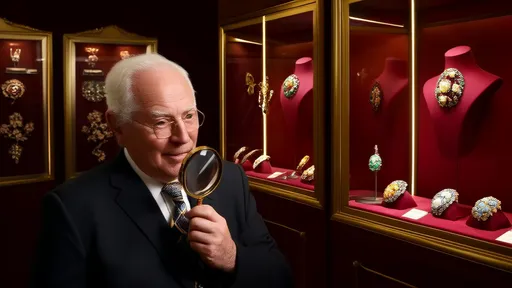
In the hushed, lamplit world of high-value pre-owned jewelry, a unique breed of professional operates with the quiet intensity of a surgeon and the discerning eye of a master art critic. These are the authenticators, the guardians of trust for online marketplaces, whose daily task is to sift through a relentless torrent of pieces—some treasures, some clever forgeries. The notion of evaluating a hundred items in a single day seems a superhuman feat to the layperson. How does one cultivate such a razor-sharp, almost instinctual expertise? The journey is less about acquiring a singular superpower and more about a grueling, multi-faceted apprenticeship of the senses, a deep immersion into the very soul of materials and craftsmanship.

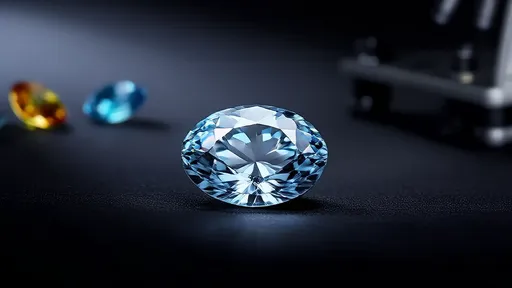
The foundation of this expertise is, unsurprisingly, an encyclopedic knowledge base. An authenticator does not simply learn about gems and metals; they internalize their histories, their behaviors, and their very essence. This begins with formal gemological education, such as credentials from the Gemological Institute of America (GIA), which provides the essential scientific lexicon. They commit to memory the intricate specifics of the Four Cs for diamonds—but also the far more nuanced characteristics of colored gemstones: the velvety blue of a Kashmir sapphire, the precise "pigeon's blood" red of a top-tier Burmese ruby, or the mesmerizing play-of-color in a fine opal. This knowledge extends to the hallmarks of different eras, recognizing that a Victorian-era clasp differs fundamentally from an Art Deco setting, and that a mid-century modern piece carries a distinct aesthetic weight. This vast mental library is their first and most crucial filter.

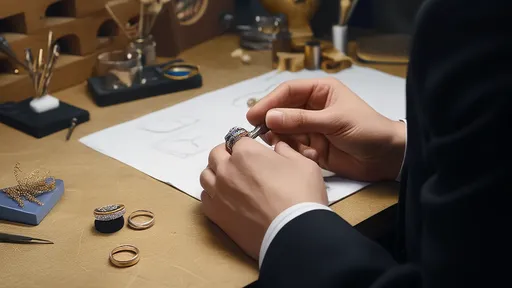
Yet, knowledge alone is sterile without its practical application: relentless, hands-on experience. This is where the eye is truly trained. Junior authenticators often spend years in the back rooms of auction houses or jewelry ateliers, handling thousands of pieces under the stern guidance of a mentor. They examine everything, from the most exquisite signed pieces by Cartier or Van Cleef & Arpels to the most mundane costume jewelry. This constant exposure builds a tactile and visual memory bank. They learn the exact heft of 18-karat gold versus gold-plated brass. Their fingers become sensitized to the precise coolness of platinum and the slight difference in how a diamond skims against a testing stone compared to a high-quality moissanite. This daily, physical conversation with objects is irreplaceable; it forges a kind of muscle memory for truth and deception.

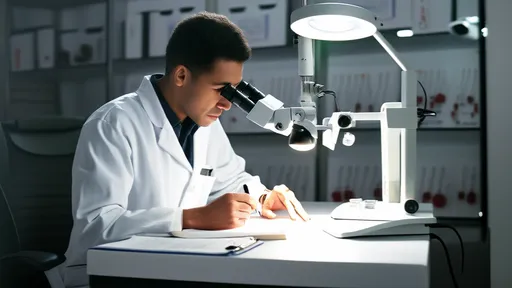
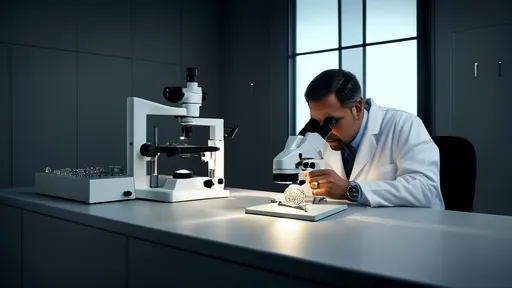
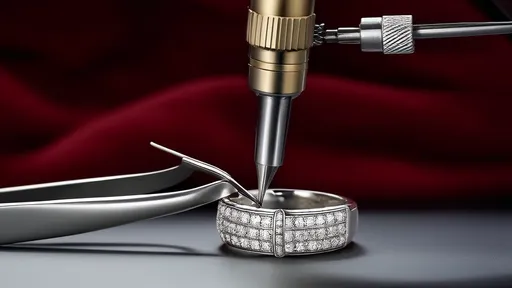
A significant part of this training involves developing a meticulous, almost ritualistic systematic approach. To maintain accuracy at volume, one cannot afford an ad-hoc method. Each piece undergoes the same rigorous sequence of inspection. It often starts with the loupe—a jeweler's magnifying glass—moving in a predetermined pattern across the item. They scrutinize the underside of settings, the interior of bands for wear patterns and hallmarks, and the prongs for signs of repair or tampering. They then employ a suite of specialized tools: a refractometer to measure a gem's refractive index, a polariscope to check for double refraction in non-singly refractive stones, and a diamond tester for thermal conductivity. This systemization is not a constraint but a framework that ensures no detail, however minute, is overlooked in the pursuit of speed. It transforms a potentially chaotic inspection into a efficient, repeatable process.

Perhaps the most critical skill honed over time is the ability to recognize the subtle, often invisible, cues of a fake. Forgers are increasingly sophisticated, creating pieces that can fool basic tests. The authenticator's advanced eye looks for the anomalies that betray an imitation. Under high magnification, they might detect the faint mold lines of a cast fake versus the sharp tool marks of hand-engraved genuine article. They examine the wear patterns; authentic antique pieces show natural, uneven wear in specific areas, while artificially distressed fakes often have uniform, unconvincing damage. They study the quality of the craftsmanship: are the solder joints clean and precise, as a reputable house would demand, or are they sloppy and inconsistent? This skill is less about what is present and more about what is absent—the lack of a hallmark where one should be, the wrong type of clasp for the period, the slightly "off" color of gold that suggests plating. It is a constant game of spotting the single wrong note in a symphony.

Finally, and most intangibly, is the development of a powerful intuition, a "gut feeling" that is actually the subconscious synthesis of all their training and experience. After examining tens of thousands of pieces, patterns become ingrained. An authenticator might pick up a piece and feel a immediate sense of dissonance—something about its weight, its balance, or the way light plays across a stone doesn't align with the story it's supposed to tell. This instinct is never the sole basis for a judgment; it is always the alarm bell that prompts an even deeper, more forensic investigation. It is the culmination of their craft, the moment where knowledge, experience, and sensory perception fuse into an almost instantaneous recognition of authenticity. This sixth sense is what allows them to navigate a workload of a hundred pieces a day not as a frantic race, but as a disciplined, flowing practice of discernment.

The life of a jewelry authenticator is one of perpetual learning and intense focus. Their "fire eyes" are not a gift but an earned attribute, forged in the crucible of endless study, countless handled objects, and an unwavering commitment to precision. In a digital marketplace where a single misjudgment can shatter consumer trust, these professionals stand as the essential human barrier against deception, their keen eyes ensuring that history, beauty, and value are recognized and preserved with unwavering accuracy.
Recommend Posts
Jewelry

Irreversible Operations in Jewelry Repair: Which Repairs Can Damage Value?"

By /Aug 28, 2025

In the intricate world of jewelry repair, there exists a delicate balance between restoration and preservation. While many repairs can breathe new life into cherished pieces, certain procedures cross a threshold into what experts term "irreversible operations." These interventions, though often well-intentioned, can fundamentally alter a piece's character and, more critically, its market value. Understanding which repairs fall into this category is essential for collectors, owners, and even seasoned jewelers, as the line between saving a piece and compromising its worth is often perilously thin.
Jewelry

Common Jewelry Wear and Tear Cases: Preventing Ring Deformation, Gemstone Loosening, and Necklace Tangling

By /Aug 28, 2025

In the world of fine jewelry, the joy of wearing cherished pieces often comes with the hidden risk of damage that can occur through daily wear. From the subtle warping of a beloved ring to the unsettling looseness of a precious gemstone or the frustrating entanglement of a delicate necklace, these issues not only detract from the beauty of the jewelry but can also lead to significant financial and emotional loss. Understanding how to prevent such damage is essential for any jewelry owner who wishes to preserve their investments and keep their pieces in pristine condition for years to come.
Jewelry

Appraiser on Second-hand Jewelry Platform: Inspecting Hundreds of Items Daily, How to Develop a Keen Eye?

By /Aug 28, 2025

In the hushed, lamplit world of high-value pre-owned jewelry, a unique breed of professional operates with the quiet intensity of a surgeon and the discerning eye of a master art critic. These are the authenticators, the guardians of trust for online marketplaces, whose daily task is to sift through a relentless torrent of pieces—some treasures, some clever forgeries. The notion of evaluating a hundred items in a single day seems a superhuman feat to the layperson. How does one cultivate such a razor-sharp, almost instinctual expertise? The journey is less about acquiring a singular superpower and more about a grueling, multi-faceted apprenticeship of the senses, a deep immersion into the very soul of materials and craftsmanship.
Jewelry

The Ultimate Guide to Necklace Lengths: Which Collar Style Suits Choker, Princess, and Opera Necklaces?

By /Aug 28, 2025

When it comes to accessorizing with necklaces, the length of the piece plays a pivotal role in how it complements your outfit, particularly the neckline. Understanding the synergy between necklace lengths and various necklines can transform your style from ordinary to extraordinary. Among the most popular necklace lengths are the collar, princess, and opera styles, each offering distinct characteristics that harmonize with specific types of tops and dresses. This guide delves into the art of pairing these necklace lengths with appropriate necklines to achieve a polished and cohesive look.
Jewelry

Establishing a Personal Jewelry Archive: Preparing for Collection, Insurance, and Legacy

By /Aug 28, 2025

In the quiet moments of reflection, we often find ourselves drawn to the pieces that have journeyed through time with us—the jewelry that adorns our lives with meaning beyond mere ornamentation. These treasures, whether inherited, acquired, or gifted, carry stories etched in gold and gemstones, whispers of love, triumph, and legacy. Yet, too often, their significance is left to memory, vulnerable to the passage of time and the unpredictability of life. Establishing a personal jewelry archive is not merely an administrative task; it is an act of preservation, a deliberate step toward honoring the past while securing the future.
Jewelry

The Fluorescence" Indicator of Gemstones: From Lab Reports to Everyday Wear Impact

By /Aug 28, 2025

In the world of gemstones, fluorescence often remains one of the most misunderstood and overlooked characteristics. To the average consumer, the term might evoke images of blacklight posters or glow-in-the-dark novelties, but in gemology, it carries a far more nuanced significance. Fluorescence refers to the phenomenon where a gemstone emits visible light when exposed to ultraviolet radiation. This captivating trait can dramatically alter a stone's appearance under different lighting conditions, making it a critical factor in both valuation and aesthetic appreciation. While some buyers actively seek out fluorescent gems for their unique properties, others approach them with caution, influenced by myths and market perceptions that have persisted for decades.
Jewelry

A Day in the Life of a Gemologist: The True and False Rashomon" in the Lab

By /Aug 28, 2025

In the hushed, temperature-controlled laboratory, every surface gleams under the sterile white light. Here, amid the hum of high-powered microscopes and spectral analyzers, the world’s most coveted treasures are stripped of their stories and reduced to elemental truths. This is the domain of the gemologist, a modern-day detective whose work is less about glamour and more about resolving the silent, high-stakes disputes of authenticity. I spent a day with Eleanor Vance, a veteran gemologist with over thirty years of experience, to understand the intricate dance of science, art, and human nature that defines her profession.
Jewelry

Privacy Boundaries of Emotional Data Recording in Sentiment-Aware Smart Jewelry

By /Aug 28, 2025

In an era where technology intertwines with the most personal aspects of our lives, a new frontier has emerged at the intersection of fashion, wellness, and data: emotional intelligent jewelry. These elegant accessories, often indistinguishable from their traditional counterparts, are embedded with sophisticated sensors capable of tracking physiological markers like heart rate variability, skin conductance, and body temperature. The purported aim is noble—to provide the wearer with insights into their emotional state, potentially offering alerts for rising anxiety, moments of calm, or patterns in mood fluctuations. Yet, beneath the shimmering surface of these innovative adornments lies a complex and murky ethical quandary: where exactly do we draw the privacy boundary for data that is, by its very nature, intimately and inherently ours?
Jewelry

Circular Economy Model in the Jewelry Industry: Challenges of Standardization and Scalability in Gold Remodeling

By /Aug 28, 2025

The jewelry industry stands at a pivotal crossroads, where tradition meets transformation. For centuries, gold has been cherished not only for its lustrous beauty but also for its enduring value, often passed down through generations as heirlooms or melted and reshaped into new creations. This practice of repurposing old gold—whether from broken pieces, outdated designs, or sentimental items no longer in use—has long been a quiet undercurrent in the world of jewelry. However, as global awareness of sustainability and circular economy principles grows, what was once a niche, artisanal process is now being scrutinized for its potential to become a standardized, scalable model within the broader jewelry sector.
Jewelry

Virtual Jewelry (NFT) Materialization: How to Cast Digital Assets into Wearable Physical Objects?"

By /Aug 28, 2025

The digital revolution has ushered in an era where virtual assets hold tangible value, with Non-Fungible Tokes (NFTs) standing at the forefront of this transformation. While these digital creations have captivated collectors and investors worldwide, a new frontier is emerging: the physical manifestation of these virtual treasures. The concept of turning pixels into wearable art is not merely a novelty but a significant evolution in how we perceive and interact with digital ownership. This process, often referred to as "phygital" integration, bridges the gap between the intangible digital realm and the physical world, offering a unique way to showcase and experience NFTs beyond the screen.
Jewelry

The Role of AI in Design: Auxiliary Tool or Creative Entity?

By /Aug 28, 2025

In the ever-evolving landscape of design, the role of artificial intelligence has become a central topic of discussion among creatives, technologists, and industry observers alike. What began as a simple tool for automating repetitive tasks has grown into a sophisticated partner capable of generating complex visual elements, suggesting layouts, and even predicting user behavior. Yet, the question persists: is AI merely an advanced assistant in the designer's toolkit, or is it emerging as a creative entity in its own right? The answer, as it often is with technology, is nuanced and multifaceted, reflecting the diverse ways in which AI is integrated into creative workflows across the globe.
Jewelry

Balancing Function" and "Decoration": Who Can Truly Master the Art of Smart Rings?

By /Aug 28, 2025

In the rapidly evolving landscape of wearable technology, the smart ring has emerged as a discreet yet powerful contender, promising to blend seamlessly into daily life while delivering cutting-edge functionality. Unlike bulkier devices such as smartwatches or fitness bands, these miniature marvels face a unique challenge: balancing robust technological capabilities with elegant, wearable design. The question of whether any product can truly achieve this equilibrium has become a central debate among consumers, designers, and tech enthusiasts alike.
Jewelry

A Modern Interpretation of the Jewelry Parure: Is a Complete Set Still Necessary for Today's Women?

By /Aug 28, 2025

In the hushed halls of European palaces, the parure reigned supreme. A complete, meticulously matched set of jewelry—necklace, earrings, bracelet, brooch, and often a diadem—was the ultimate symbol of status, wealth, and refined taste. It was a uniform for the aristocracy, a declaration of one's place in the world, locked away in velvet-lined cases and brought out for the most significant of occasions. The very concept was one of totality, of a complete and harmonious aesthetic statement.
Jewelry

The Lightweight Revolution" of Bridal Headpieces: How to Say Goodbye to the "Painful Tiara"?

By /Aug 28, 2025

For centuries, the bridal crown has reigned as the quintessential symbol of matrimonial elegance, a glittering emblem of tradition perched atop a bride’s head. Yet, behind the dazzling facade of diamonds, pearls, and intricate metalwork often lay a less glamorous reality: a literal pain in the neck. The weight of these ornate headpieces, sometimes exceeding a kilogram, has long been the unspoken burden of brides, leading to headaches, pressure points, and a constant, nagging discomfort on what is supposed to be the happiest day of their lives. The quest for beauty, it seemed, demanded a physical toll.
Jewelry

The Pin Enthusiast's Guide to Building a Thematic Collection System"

By /Aug 28, 2025

In the world of collecting, few pursuits are as intimate and telling as the thematic curation of brooches. To the uninitiated, a brooch might seem a mere accessory, a sparkle on a lapel. But to the dedicated collector, the "Brooch Fanatic," each piece is a chapter in a larger story, a tangible fragment of history, art, and personal passion. The journey from a simple accumulation of pretty objects to a coherent, meaningful collection is an art form in itself, a discipline that requires vision, research, and a profound connection to the chosen theme.
Jewelry

Jewelry Insurance Claim Record: How to Get Compensation for a Lost Single Earring?

By /Aug 28, 2025

In the world of fine jewelry, few moments are as disheartening as realizing you’ve lost a single earring. Whether it was an heirloom piece passed down through generations or a recent investment in a stunning pair of diamond studs, the sentimental and financial blow can be significant. Many assume that losing just one earring from a pair might not qualify for an insurance claim, or that the process would be too complicated to pursue. However, with the right coverage and proper documentation, policyholders can often secure compensation even for a single lost earring.
Jewelry

The Psychology of Jewelry as a Gift: How to Quantify Emotional Value?

By /Aug 28, 2025

In the hushed galleries of luxury jewelers, amidst the soft glow of display cases, a quiet but profound transaction occurs daily. It is rarely just the exchange of currency for meticulously cut stones and polished precious metals. More often, it is the transfer of an emotion—a promise, an apology, a celebration, a memory made tangible. The question of how to quantify the emotional value of jewelry as a gift is not merely an academic exercise for economists and marketers; it is to dissect the very soul of consumer behavior, where deep-seated psychological drivers meet the cold, hard calculus of price tags.
Jewelry

Pricing Strategies for Independent Jewelry Designers: How Difficult is it to Value Creativity and Labor Hours?

By /Aug 28, 2025

In the glittering world of jewelry, where mass-produced pieces dominate retail shelves and online marketplaces, independent designers carve out a unique space with their artistry and craftsmanship. Yet behind every handcrafted ring, necklace, or bracelet lies a complex and often daunting challenge: how to price their creations in a way that truly reflects the value of their creativity and labor. For many, this process is as much an art as the design itself.
Jewelry

Retro-Futuristic Material Collision: When Titanium Meets Vintage Engraving

By /Aug 28, 2025

In the ever-evolving landscape of design, a fascinating dialogue between epochs unfolds as titanium, the quintessential material of futuristic aspiration, engages in a tactile dance with the intricate artistry of vintage engraving. This convergence is not merely a stylistic experiment but a profound narrative on the cyclical nature of inspiration, where the cold, sleek surfaces of advanced metallurgy are warmed by the handcrafted whispers of history. The result is a visual and conceptual symphony that challenges our perceptions of time, value, and beauty.
Jewelry

Influence of Different Formulas on Metal Flowability in Lost Wax Casting with Plaster Molds

By /Aug 28, 2025

In the intricate world of metal casting, few techniques are as revered or as ancient as the lost-wax method. This process, which dates back thousands of years, allows for the creation of incredibly detailed and complex metal objects, from delicate jewelry to monumental sculptures. At the very heart of this method lies a critical, yet often underappreciated, component: the plaster mold. It is this mold that receives the molten metal, and its composition is paramount to the success of the entire operation. The specific recipe of the plaster blend directly influences a key casting characteristic: metal fluidity. Understanding this relationship is not merely an academic exercise; it is a practical necessity for foundries and artisans seeking to push the boundaries of detail, minimize defects, and achieve consistent, high-quality results.