In the intricate world of metal casting, few techniques are as revered or as ancient as the lost-wax method. This process, which dates back thousands of years, allows for the creation of incredibly detailed and complex metal objects, from delicate jewelry to monumental sculptures. At the very heart of this method lies a critical, yet often underappreciated, component: the plaster mold. It is this mold that receives the molten metal, and its composition is paramount to the success of the entire operation. The specific recipe of the plaster blend directly influences a key casting characteristic: metal fluidity. Understanding this relationship is not merely an academic exercise; it is a practical necessity for foundries and artisans seeking to push the boundaries of detail, minimize defects, and achieve consistent, high-quality results.
The journey of a lost-wax casting begins long before the metal is ever heated. It starts with the meticulous creation of a wax original, a perfect replica of the desired final object. This wax model is then painstakingly attached to a system of wax channels, known as sprues and gates, which will later form the pathways for the molten metal. This entire wax assembly is then invested, or enclosed, within a flask that is filled with a liquid plaster slurry. This is the first and perhaps most crucial juncture where formulation comes into play. The slurry is far from simple wet plaster; it is a carefully engineered composite material, a refractory investment designed to withstand extreme thermal shock.
The base of most investment plasters is gypsum plaster, also known as calcium sulfate hemihydrate. In its pure form, gypsum plaster is wholly inadequate for metal casting. Its thermal stability is poor, and it would shatter upon contact with molten metal. To transform it into a viable investment, a host of other materials are introduced. The most common additive is silica, in various forms such as cristobalite, quartz, or fused silica. These silica materials are the workhorses of the investment, providing the essential refractory properties—the ability to withstand high temperatures without softening or decomposing. The type, particle size, and ratio of silica to plaster fundamentally alter the mold's behavior during the pour.
When this slurry is mixed with water and poured around the wax model, a complex chemical reaction occurs. The plaster rehydrates, setting into a hard, solid block that encapsulates the wax. Once set, the entire mold is subjected to heat in a kiln. This firing process serves two vital purposes: it melts out the wax (hence "lost-wax"), leaving behind a perfect hollow cavity, and it chemically converts the gypsum in the investment, driving off crystalline water and sintering the silica particles together. This creates a rigid, micro-porous network capable of surviving the thermal assault of the molten metal. The precise conditions of this burnout cycle are themselves dictated by the investment's formula.
The concept of metal fluidity, in a foundry context, extends beyond mere thinness like water. It describes the molten metal's ability to fill the entire mold cavity, replicating every minute detail of the original wax model before it begins to solidify. High fluidity means the metal can travel through thin sections and intricate channels without prematurely freezing, preventing disastrous casting defects like misruns (incomplete casts) or cold shuts (poor fusion between metal streams). Low fluidity can leave a casting riddled with missing details and incomplete sections. While factors like metal temperature and alloy composition are primary drivers of fluidity, the mold itself exerts a powerful influence through its thermal characteristics.
This is where the plaster formula becomes the unsung hero of the process. A mold is not a passive container; it is an active thermal system. The moment molten metal hits the mold walls, a frantic transfer of heat begins. The metal loses its heat to the cooler mold material, causing it to solidify. The rate at which this heat is absorbed—the mold's thermal conductivity—is a primary regulator of metal fluidity. A mold that draws heat away too quickly will chill the metal rapidly, shortening its window of fluidity and potentially preventing it from filling fine details. Conversely, a mold that is too insulating may allow the metal to remain liquid for too long, which can lead to other issues like gross porosity or metal penetration into the mold wall.
The formulation of the investment plaster is the primary dial by which a foundry engineer can control this thermal conductivity. The ratio of plaster binder to silica aggregate is the most significant factor. A formula with a higher proportion of silica, particularly cristobalite, generally creates a mold with lower thermal conductivity. Cristobalite undergoes a crystalline phase change at a specific temperature, which helps to regulate heat transfer and can actually improve the feeding of metal as it solidifies. This "softer" thermal profile can be ideal for capturing extremely fine details in alloys that have a short freezing range. The metal stays liquid just long enough to fill every crevice before the mold's heat absorption triggers solidification.
On the other hand, a formula leaning more heavily on the plaster binder or utilizing different forms of silica like quartz will typically result in higher thermal conductivity. These molds act like a heat sink, aggressively pulling thermal energy from the metal. For certain alloys that are prone to coarse grain structure or that have a tendency to oxidize if held at high temperature for too long, this rapid cooling is desirable. It can produce a finer-grained, stronger metallurgical structure. The art lies in balancing this rapid cooling with the need for sufficient fluidity. If the conductivity is too high, the metal will freeze in the gates, never reaching the pattern itself.
Beyond the plaster-to-silica ratio, the particle size distribution of the ingredients plays a subtle but critical role. A well-graded blend of different particle sizes packs together more densely, reducing the overall porosity of the set investment. A less porous mold is denser and possesses higher thermal conductivity, again influencing the cooling rate. Furthermore, the fineness of the silica flour used can affect the surface finish of the final casting. An extremely fine silica can produce a smoother mold surface, which translates to a smoother metal surface, but it may also affect the permeability of the mold to gases evolved during the pour.
Modern investment formulas often incorporate proprietary additives and modifiers to fine-tune their performance. These can include materials to control the setting time and expansion characteristics of the plaster during both the initial set and the burnout phase. A precise and predictable expansion is vital to compensate for the solidification shrinkage of the metal, ensuring dimensional accuracy. Other additives might be included to improve the slurry's flowability around the wax pattern, to enhance green strength (strength before burnout), or to increase the fired strength of the mold to handle the physical pressure of the metal pour.
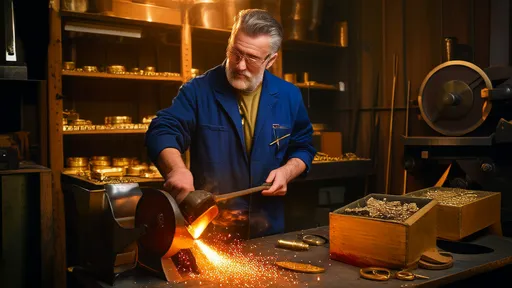
The interplay between these material variables creates a complex matrix of cause and effect. A foundry working with a delicate gold alloy for jewelry will prioritize an investment formula that promotes excellent detail reproduction—likely one with high silica content and controlled, low thermal conductivity. A studio casting large bronze sculptures will need an investment with high fired strength to withstand the weight and pressure of the large volume of metal, potentially sacrificing some fine-detail capability for structural integrity. For a high-volume dental lab casting cobalt-chrome partial dentures, the formula must offer consistent setting expansion, rapid burnout, and the ability to produce a clean, contamination-free surface finish on the biocompatible metal.
Ultimately, the selection of a plaster investment formula is a decision of profound importance. It is a balancing act between thermal conductivity and fluidity, between strength and detail, between expansion and accuracy. There is no single "perfect" recipe; the optimal formulation is always relative to the metal being cast, the size and complexity of the object, and the specific desired outcomes of the craftsman. It represents a deep, almost alchemical knowledge passed down and refined through generations of foundry work. By understanding the science behind how different plaster recipes influence the fundamental behavior of molten metal, artisans and engineers can move from mere replication to true mastery, ensuring that the fiery liquid metal faithfully obeys their design and fills every intended curve and angle of the mold, time after time.
By /Aug 28, 2025

By /Aug 28, 2025

By /Aug 28, 2025

By /Aug 28, 2025

By /Aug 28, 2025
By /Aug 28, 2025
By /Aug 28, 2025

By /Aug 28, 2025
By /Aug 28, 2025

By /Aug 28, 2025

By /Aug 28, 2025

By /Aug 28, 2025

By /Aug 28, 2025

By /Aug 28, 2025

By /Aug 28, 2025

By /Aug 28, 2025

By /Aug 28, 2025

By /Aug 28, 2025

By /Aug 28, 2025
By /Aug 28, 2025
