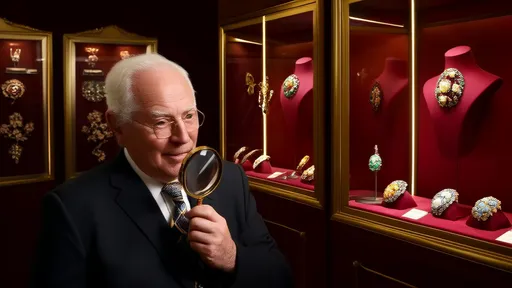
In the hushed galleries of luxury jewelers, amidst the soft glow of display cases, a quiet but profound transaction occurs daily. It is rarely just the exchange of currency for meticulously cut stones and polished precious metals. More often, it is the transfer of an emotion—a promise, an apology, a celebration, a memory made tangible. The question of how to quantify the emotional value of jewelry as a gift is not merely an academic exercise for economists and marketers; it is to dissect the very soul of consumer behavior, where deep-seated psychological drivers meet the cold, hard calculus of price tags.
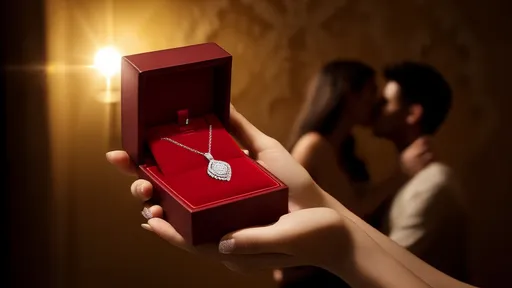
The journey begins not with a desire for an object, but with a need to articulate a feeling that often defies words. A person enters a store seeking a symbol. They are not buying a diamond; they are purchasing a physical manifestation of a lifelong commitment. They are not acquiring a string of pearls; they are securing an heirloom to represent family legacy and maternal love. This fundamental disconnect between the product's material worth and its intended symbolic meaning is the central paradox of the jewelry gift economy. The price becomes a secondary language, a numerical expression of the giver's perceived depth of feeling, sacrifice, and the significance they assign to the recipient.
This translation of emotion into economic value is heavily influenced by what psychologists term effort justification. A consumer who has spent months saving, researching, and deliberating over the perfect piece automatically infuses it with greater emotional weight. The struggle and sacrifice involved in its acquisition become part of the gift's narrative. This self-perceived effort directly inflates the emotional valuation, creating a personal, non-transferable premium on the item that far exceeds its appraised market value. The giver isn't just giving a ring; they are giving the story of how they chose it, the time invested, and the financial prioritization it represented.
Furthermore, the context of the relationship plays a monumental role in this quantification. A piece of jewelry gifted to a spouse on a landmark anniversary carries a different emotional charge—and thus a different subjective value—than an identical piece given to a new romantic partner. The history, shared experiences, and anticipated future all serve as multipliers. The value is not static; it is an algorithm that continuously updates based on the health and duration of the relationship. A gift given during a period of harmony is cherished more highly than one given as a reconciliatory peace offering, even if the latter is more expensive. The emotional state at the moment of receipt becomes a permanent part of the object's aura.
Brand storytelling and heritage act as powerful external forces that provide a framework for this quantification. A百年-old maison can command prices that a new artisanal jeweler cannot for a technically superior piece because it is selling more than craftsmanship. It is selling a ready-made narrative of tradition, excellence, and timelessness. The consumer, in buying this brand, is purchasing a chapter of that story to graft onto their own. The emotional value is pre-loaded by generations of marketing, celebrity endorsements, and cultural cachet. The logo, the signature blue box, the specific design codes—all are shortcuts that communicate a universally understood message of luxury and affection, allowing the giver to tap into an established value system without having to build the narrative from scratch.
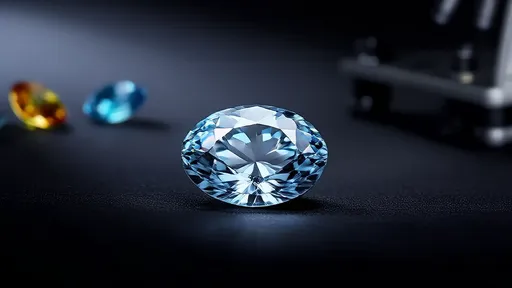
The materials themselves are chosen for their inherent symbolic properties, which provide a baseline for emotional measurement. Gold symbolizes permanence and the sun; its enduring, untarnishable nature makes it a metaphor for eternal love. Diamonds, with their unparalleled hardness and brilliant fire, represent invincibility, purity, and clarity of commitment. Colored gemstones carry their own lexicon: the passion of a ruby, the tranquility of a sapphire, the hope of an emerald. This ancient, almost archetypal language gives consumers a starting point for their emotional equation. The choice of material is the first and most crucial variable plugged into the formula, setting the initial tenor and perceived weight of the emotional message.
Perhaps the most potent quantifier of emotional value is the element of time. Jewelry is uniquely positioned as a gift that is meant to last, to be worn and seen for decades, often becoming an heirloom. This anticipated longevity is a key component of its initial valuation. The giver is not just making a statement for today; they are making an investment in a future memory. They are purchasing an artifact that will, they hope, be present at future anniversaries, passed down to children, and serve as a physical anchor for stories told for generations. This forward-looking emotional projection adds immense intangible value, a premium paid for a legacy that has not yet unfolded.
Ultimately, the final and most personal quantification happens not with the giver, but with the recipient. The market price, the brand story, the giver's effort—all these factors are proposed values. The true emotional worth is ratified in the moment of reception and recalibrated every time the piece is worn. Does it feel like "them"? Does it accurately reflect the relationship? Does it bring joy and a sense of being known and cherished? This highly subjective and deeply personal assessment is the real determinant of value. A modest, thoughtful piece that perfectly captures the recipient's taste can hold infinitely more emotional worth than a far costlier item that feels generic or misplaced.
In conclusion, the quantification of emotional value in jewelry gifting is a complex and deeply human alchemy. It is a dynamic formula where effort, relationship context, brand narrative, material symbolism, and projected legacy are combined with a base market price. The result is a uniquely personal valuation that exists on a parallel track to financial appraisal. It explains why a simple gold band can be priceless to its owner while a vault of uncut diamonds can feel emotionally barren. In the end, the most valuable gems are not those with the perfect clarity or carat weight, but those that have been perfectly imbued with meaning, making the invisible visible and the intangible enduringly concrete.
By /Aug 28, 2025
By /Aug 28, 2025

By /Aug 28, 2025
By /Aug 28, 2025
By /Aug 28, 2025
By /Aug 28, 2025
By /Aug 28, 2025
By /Aug 28, 2025
By /Aug 28, 2025
By /Aug 28, 2025

By /Aug 28, 2025
By /Aug 28, 2025
By /Aug 28, 2025
By /Aug 28, 2025
By /Aug 28, 2025
By /Aug 28, 2025
By /Aug 28, 2025
By /Aug 28, 2025

By /Aug 28, 2025
By /Aug 28, 2025